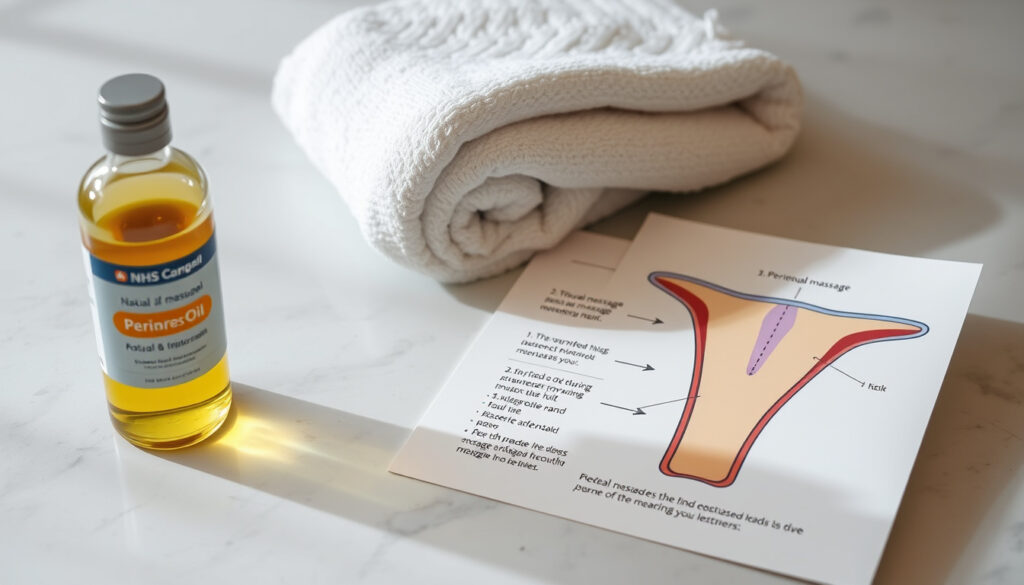
Perineal Massage – Complete Step-by-Step Guide From the NHS
Perineal massage is a gentle stretching technique used in the weeks before birth to help the perineum become more flexible. According to NHS guidance and research summaries from institutions like the Cleveland Clinic, this practice may reduce the chance of tearing or the need for an episiotomy during vaginal delivery. The technique is generally described as low-risk when performed correctly, but it requires careful attention to timing, positioning, and lubrication.
Many expectant parents hear about perineal massage from midwives or antenatal classes, but detailed instructions can vary. This guide consolidates step-by-step instructions, safety advice, and the current state of evidence from sources including the NHS, the Royal College of Obstetricians and Gynaecologists (RCOG), and peer-reviewed research, to provide a clear and balanced overview.
How to Perform Perineal Massage: A Step-by-Step Guide
- NHS and RCOG recommend starting perineal massage from 35 weeks of pregnancy.
- Research, including a 2020 PubMed systematic review, shows a significant reduction in severe perineal tears.
- Key techniques involve using a lubricant, inserting thumbs about 3-5 cm, and stretching gently in a U-shaped or side-to-side motion.
- Many users report initial discomfort but find consistency leads to long-term benefits during labour.
- Males may also find benefits for pelvic floor health, though the research base is less extensive.
- The massage is generally done for about 5 minutes per session, 3-4 times a week.
- Stop immediately if you experience pain, bleeding, or have an active vaginal infection or genital herpes.
| Fact | Detail |
|---|---|
| Start Time | 34-35 weeks gestation (NHS / RCOG) |
| Duration | 5 minutes per session |
| Risk Reduction | Severe tear risk reduced (OR 0.68, 95% CI 0.49-0.94 per Aquino 2020) |
| Key Lubricants | Water-soluble, vitamin E, almond, or specialized oils |
| Positions | Semi-reclined, standing with one leg raised, or partner-assisted |
Step-by-Step Technique
Before starting, wash your hands and trim your nails to reduce the risk of irritation or infection. Find a comfortable, private position such as lying down, sitting, standing with one foot raised, or in the shower, as suggested by multiple NHS trust patient leaflets.
Use a lubricant or natural oil such as olive, sunflower, or sweet almond oil. Some NHS inform guidance advises against petroleum-based products, scented oils, baby oil, and mineral oil. Insert one or two thumbs, or sometimes fingers, about 3–5 cm into the vagina. Press gently downward toward the anus or back passage, then move the thumbs or fingers outward in a U-shaped or side-to-side motion. Hold the stretch for about 1–2 minutes, then continue gently for a total of about 5 minutes per session.
A mild stretching, tingling, or burning sensation can be normal. It should not be painful. If it hurts, stop and discuss it with a midwife or clinician.
Positions for Self-Massage and Partner-Assisted Massage
You can perform the massage alone or with a partner. When doing it alone, lying on your back with knees bent, or standing with one foot on a stool, are common choices. If a partner assists, they should use the same gentle pressure and technique. NHS trust leaflets commonly advise doing the massage after a warm bath or shower, as warmth may make the tissue feel softer and more comfortable.
When to Start Perineal Massage and Is It Safe?
NHS-style guidance generally recommends starting around 34 weeks of pregnancy. The routine often suggested is doing it 3–4 times a week rather than daily forceful stretching. Consistency is seen as more important than frequency.
Perineal massage is considered low-risk for most people when done gently and with clean hands. However, there are clear situations where you should not perform the massage. Do not do perineal massage if you have active genital herpes, vaginal bleeding, or a vaginal infection such as thrush. Keep your hands clean and nails short to reduce the risk of irritation or infection. If the technique causes pain, stop and consult a midwife or clinician.
The recommended depth of insertion is about 3–5 cm (roughly the length of the thumb to the first knuckle). You should not press so hard that it causes sharp pain. The pressure should be gentle and consistent, focused on stretching the tissue, not forcing it.
What Are the Proven Benefits of Perineal Massage?
The main proposed benefit of perineal massage is a lower risk of perineal trauma, especially among first-time mothers. This is based on guidance and research summaries cited by hospitals and pregnancy health sites. It may also help you become familiar with the stretching sensation of birth and improve comfort with pelvic floor relaxation during labour.
What the NHS Says
NHS trust patient leaflets commonly recommend perineal massage from 35 weeks’ gestation as a low-cost, low-risk intervention. They state that the massage can be done by yourself or with a partner, often after a warm bath or shower. They also recommend repeating it every other day or 3–4 times weekly rather than daily forceful stretching.
What the Research Shows
A systematic review published on PubMed by Aquino et al. (2020) found that perineal massage during labor is associated with a significantly lower risk of severe perineal trauma, such as third and fourth degree lacerations. The odds ratio (OR) was 0.68 with a 95% confidence interval of 0.49-0.94, indicating a meaningful reduction in risk. The clearest benefit is seen in people giving birth for the first time.
While the benefits for reducing perineal trauma are supported, the optimal frequency and duration of massage are not fully standardized across every study. The effectiveness can vary based on how consistently the technique is followed.
What Oil and Tools Should You Use for Perineal Massage?
Choosing a suitable lubricant is a key part of the process. Natural or specialized oils are recommended. Acceptable options include olive oil, sunflower oil, sweet almond oil, and vitamin E oil. Some NHS guidance explicitly says to avoid petroleum-based products, scented oils, baby oil, and mineral oil, as they may cause irritation.
While some people choose to use their hands only, there are also specialized perineal massage tools available commercially. These tools often have ergonomic designs and may include features like built-in lubricant reservoirs. However, based on available research, the specific effectiveness of a tool versus manual massage has not been rigorously compared in large studies. The technique and consistency are likely the most important factors.
Regarding perineal massage for men, it is generally considered safe for pelvic floor health. However, research on this specific application is less robust and lacks large-scale clinical trials compared to pregnancy-related use. Anyone considering this should consult a specialist for guidance on internal techniques.
Perineal Massage: Recommended Timeline from 34 Weeks
- 34 weeks: Consult with your midwife or doctor about whether perineal massage is right for you.
- 35-36 weeks: Begin daily perineal massage, aiming for about 5 minutes per session, 3-4 times a week.
- 37-40 weeks: Continue with the established routine. You may increase to 10 minutes per session if it remains comfortable.
- During labor: Studies indicate that perineal massage during labor itself may also help reduce trauma (Aquino 2020). This is typically performed by a midwife.
- Postpartum: You may continue the massage if healing is progressing well, but always consult your healthcare provider first.
What Is Proven and What Remains Uncertain?
| Established Information | Information That Remains Unclear |
|---|---|
| NHS and RCOG recommend perineal massage from 35 weeks. | The optimal frequency and duration are not fully standardized across all guidance. |
| Perineal massage during labor reduces the risk of 3rd/4th degree tears (systematic review evidence). | Effectiveness varies based on individual compliance and exact technique used. |
| Proper technique, using lubricant and gentle stretching, reduces discomfort and increases effectiveness. | Benefits of perineal massage for men (prostate health, pelvic floor) lack large-scale RCTs. |
Why Perineal Massage Works: The Evidence and Context
The perineum is the area of tissue between the vagina and the anus. During childbirth, this tissue needs to stretch significantly to allow the baby to pass through. Perineal massage is thought to work by gradually stretching the tissue, improving its elasticity and flexibility before birth. This pre-conditioning may help the perineum stretch more easily during labour, reducing the likelihood of it tearing or requiring a surgical cut (episiotomy).
The evidence base, as reflected in clinical guidance pages from the NHS and organizations like the RCOG, supports perineal massage as a low-cost, low-intervention strategy. The strongest evidence points to a reduction in perineal trauma, particularly for first-time mothers. Cultural and individual factors, such as previous birth history and birthing position, also play a role in the risk of tearing, but the massage is considered a safe way to potentially lower that risk.
What Do Official Sources Say About Perineal Massage?
From 35 weeks onwards, you or your partner can use daily perineal massage until your baby is born which may reduce your risk of tearing.
— RCOG
Perineal massage has been proven to reduce perineal trauma and therefore we would recommend this to women from 35 weeks’ gestation.
— NHS Bedfordshire Hospitals
Perineal massage during labor is associated with significant lower risk of severe perineal trauma, such as third and fourth degree lacerations.
— Aquino (PubMed 2020)
Summary: Key Takeaways for Your Birth Plan
Perineal massage is a gentle, low-risk technique supported by the NHS and RCOG for reducing the chance of perineal trauma during childbirth. Starting around 34-35 weeks, using a suitable lubricant, and following a consistent routine of 5 minutes, 3-4 times a week, is the most commonly recommended approach. While the evidence for its benefits is clearest for first-time mothers, it remains a simple strategy for many expecting parents to consider. For more general health guidance, you might also find the Potty Train – Complete Guide With NHS and Expert Advice or the Belly Piercing – Complete Guide to Healing, Rejection and Jewelry useful for related health and body-care topics.
Frequently Asked Questions
Does perineal massage hurt?
Mild discomfort or a stretching sensation is normal, but sharp pain is a sign to stop or adjust your technique. You should never force the stretch.
Can I do perineal massage if I have a vaginal infection?
Consult your healthcare provider first. You should avoid massage if you have an active infection or irritation, such as thrush.
What do real users say about perineal massage on Reddit?
Many Reddit users report positive experiences and feel it helped reduce tearing. Some mention initial awkwardness or discomfort, but consistency is frequently praised.
Is perineal massage for men safe?
It is generally considered safe for pelvic floor health, but there is less research on this use. Consult a specialist for guidance on internal techniques.
Where can I find a reliable perineal massage diagram?
The NHS and NCT websites provide clear anatomical diagrams. The NCT’s guide includes a step-by-step picture to help illustrate the technique.
Can my partner help with perineal massage?
Yes, partners can assist. They should use the same gentle, consistent pressure and technique, ideally after receiving clear instructions.
What is the best oil for perineal massage?
Natural oils like olive, sunflower, sweet almond, and vitamin E oil are commonly recommended. Avoid petroleum-based products, scented oils, baby oil, and mineral oil.
More related posts
 Joe Wicks – Biography, Workout Method, Net Worth & Family
 Keir Starmer – Biography, Age, Wife and Approval Rating
 Pain in Right Side – Common Causes and When to Seek Help
 Christopher McDonald Movies and TV Shows – Full Filmography
 UK Visas and Immigration – Complete Services Overview
 Asda Easter Sunday Hours – Closed 2026 UK Weekend Guide
 Range Rover Sport – New and Used Prices UK 2025 Guide
