What Is Turmeric Good For – Top Health Benefits Explained
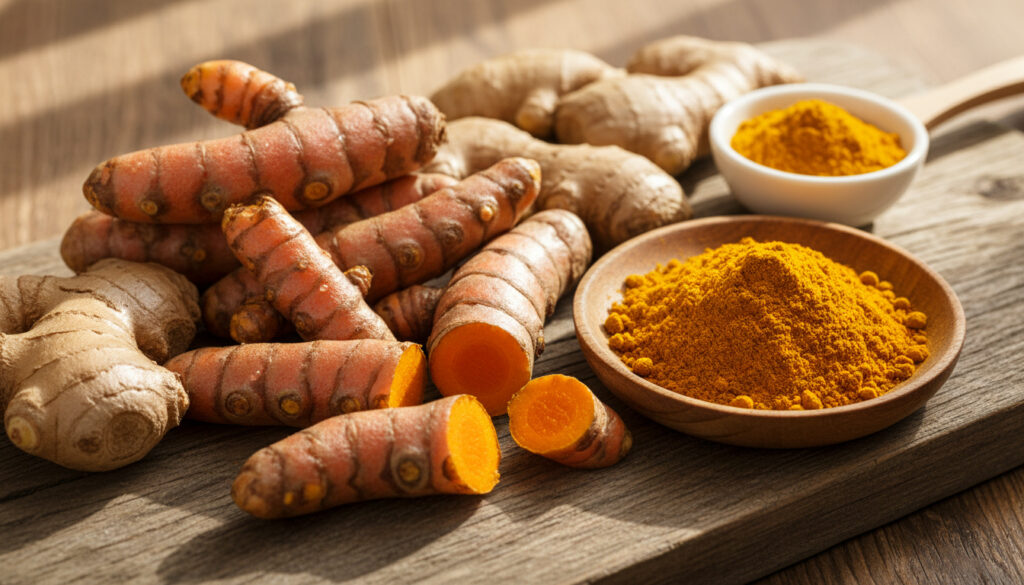
Turmeric, the golden rhizome of the Curcuma longa plant, has transitioned from traditional Ayurvedic kitchens to modern clinical trials. Its primary bioactive constituent, curcumin, comprises roughly three to five percent of the spice and drives most pharmacological research. Clinical investigations now focus on its capacity to modulate inflammatory pathways, with particular attention to osteoarthritis, metabolic health, and digestive function.
The compound operates primarily through inhibition of the NF-kB signaling cascade, a master regulator of inflammation, while also suppressing cytokine production and enzymes such as COX-2. These mechanisms explain why patients with joint degeneration report reduced stiffness and swelling. However, curcumin’s utility extends beyond rheumatology into dermatology, hepatology, and cardiology, though evidence quality varies significantly by condition.
What Are the Top Health Benefits of Turmeric?
Curcumin (3–5% of raw turmeric)
NF-kB pathway inhibition
Strong for osteoarthritis; moderate for digestion
500–2,000 mg curcumin daily
- Comparable to NSAIDs: Randomized trials demonstrate pain relief equivalent to diclofenac for knee osteoarthritis.
- Bioavailability barrier: Raw curcumin absorbs poorly; combining with black pepper extract (piperine) significantly enhances uptake.
- Gastrointestinal safety: 0% of curcumin users required stomach treatment versus 28% on conventional NSAIDs.
- Multisystem effects: Documented anti-inflammatory activity extends to IBD, skin pruritus, and metabolic syndrome.
- Dose specificity: Arthritis requires 500 mg two to four times daily, while pruritus protocols use 1,500 mg divided in three doses.
- Cancer research gap: Despite laboratory promise, human trials for oncology applications remain underpowered.
- Historical continuity: Usage dating to 2500 BC in Ayurvedic medicine now aligns with 2021 meta-analytical confirmation.
| Parameter | Specification | Source Authority |
|---|---|---|
| Active Ingredient | Curcumin (3–5% concentration) | NIH/PMC |
| Key Benefit | Anti-inflammatory (NF-kB inhibition) | PMC7812094 |
| Bioavailability | Low; enhanced with piperine | WebMD |
| Arthritis Dose | 500 mg, 2–4 times daily (4–12 weeks) | Harvard Health |
| Cholesterol Protocol | 1.4 g turmeric extract, twice daily (3 months) | UnityPoint Health |
| Pruritus Protocol | 1,500 mg in three divided doses (8 weeks) | UnityPoint Health |
| Safety Profile | Mild GI discomfort; safer than NSAIDs | PMC7812094 |
| Clinical Equivalence | Comparable to 50 mg diclofenac twice daily | Harvard Health |
| Historical Origin | Ayurvedic medicine (circa 2500 BC) | Historical records |
| Modern Isolation | First isolated 1937 | Chemical literature |
Is Turmeric Effective for Reducing Inflammation and Joint Pain?
Johns Hopkins Medicine reports reduced joint pain in osteoarthritis patients incorporating dietary turmeric. The effect stems from curcumin’s blockade of inflammatory mediators including cytokines, COX-2, and matrix metalloproteinases (MMPs).
Osteoarthritis and Rheumatoid Applications
A 2021 meta-analysis synthesizing ten randomized controlled trials on knee osteoarthritis found significant improvements in pain scores and functional capacity versus placebo (p ≤ 0.05). Critically, the analysis showed no significant difference between turmeric extracts and non-steroidal anti-inflammatory drugs (NSAIDs), suggesting equivalent efficacy.
Comparison with Pharmaceutical NSAIDs
Harvard Health Publishing cites a pivotal trial of 139 knee osteoarthritis patients where 500 mg curcumin three times daily produced symptom relief comparable to 50 mg diclofenac twice daily. After eight weeks, 94% of curcumin users and 97% of diclofenac users achieved ≥50% improvement. However, the curcumin cohort reported zero gastrointestinal side effects requiring treatment, versus 28% in the pharmaceutical group.
In head-to-head trials, 1,000 mg daily curcumin provided pain reduction statistically comparable to short-term NSAID therapy, though researchers note limitations in small sample sizes and brief study durations.
Anti-Inflammatory Mechanisms
The Mayo Clinic emphasizes that curcumin’s potential for joint pain and movement impairment derives specifically from these anti-inflammatory properties, which may benefit both osteoarthritis and rheumatoid arthritis populations by suppressing pro-inflammatory enzyme activity.
Can Turmeric Improve Skin Health and Digestion?
Beyond articular applications, turmeric demonstrates measurable effects on gastrointestinal inflammation and dermatological symptoms. Unlike acute viral skin conditions detailed in What Does Herpes Look Like – Stages, Symptoms and Differences, turmeric addresses chronic inflammatory skin presentations through systemic pathway modulation.
Digestive and Hepatic Support
Recent reviews indicate turmeric relieves abdominal pain associated with inflammatory bowel disease (IBD) and irritable bowel syndrome (IBS). The Mayo Clinic notes potential liver support applications via anti-inflammatory mechanisms, though human trials specifically isolating hepatoprotective effects remain sparse.
Skin and Pruritus Management
UnityPoint Health documents protocols using 1,500 mg turmeric daily divided in three doses for eight weeks to address chronic itching. General anti-inflammatory benefits may extend to acne and other inflammatory skin conditions, though specific trial data for dermatological applications remains less robust than for arthritis.
Does Turmeric Offer Benefits for Heart Health, Cancer Prevention, and Weight Loss?
Cardiovascular and oncological research presents a more tentative picture, with significant laboratory findings yet to translate consistently into human clinical outcomes.
Cardiovascular Indicators
The Mayo Clinic identifies possible reductions in cholesterol and triglycerides among turmeric’s potential benefits, suggesting cardioprotective properties mediated through anti-inflammatory and antioxidant pathways. However, meta-analyses specifically quantifying cardiovascular mortality or major adverse cardiac events remain unavailable in current literature.
Curcumin’s absorption improves significantly when formulated with piperine from black pepper. Without this adjuvant, intestinal uptake remains minimal, potentially explaining variable clinical outcomes across different supplement formulations.
Oncology and Prevention
While extensive cell and animal studies demonstrate anti-carcinogenic mechanisms, the Mayo Clinic explicitly characterizes evidence for cancer prevention in humans as limited. Current investigations explore adjunctive roles in treatment protocols rather than standalone preventive efficacy.
Metabolic and Weight Considerations
Research directly addressing weight loss or “belly fat” reduction remains insufficient for definitive conclusions. Turmeric’s influence on metabolic syndrome likely operates through inflammation reduction rather than direct adipose tissue modulation.
Human trials for cancer, weight loss, and long-term cardiovascular outcomes are currently underpowered or absent. Recommendations for these conditions rely primarily on mechanistic plausibility and historical use rather than rigorous clinical confirmation.
What Are the Potential Risks and Proper Dosage for Turmeric?
Therapeutic dosing varies by condition and target symptom, with established protocols for musculoskeletal and dermatological applications.
Standard Dosage Protocols
For osteoarthritis and joint pain, Harvard Health and UnityPoint Health recommend 500 mg curcumin two to four times daily for periods ranging from four to twelve weeks. Hyperlipidemia protocols utilize 1.4 g turmeric extract in two divided doses daily for three months. Pruritus requires higher dosing: 1,500 mg in three divided doses over eight weeks. Meta-analytical consensus notes that optimal formulation and frequency remain unclear, with studies typically employing approximately 1,000 mg daily curcumin.
Adverse Effects and Safety
Side effects remain mild and predominantly gastrointestinal, occurring at rates comparable to placebo. Systematic reviews report no significant adverse events across randomized controlled trial cohorts. The safety advantage over NSAIDs is pronounced: zero curcumin users required stomach treatment compared to 28% of diclofenac users in comparative trials.
The Historical and Research Timeline of Turmeric
- – Traditional Ayurvedic medicine documents turmeric for digestive and inflammatory conditions.
- – Scientists first isolate curcumin, identifying it as the primary bioactive compound.
- – Large-scale randomized controlled trials establish anti-inflammatory efficacy for osteoarthritis.
- – Comprehensive meta-analysis of ten RCTs confirms equivalence to NSAIDs for knee osteoarthritis pain.
- – Current research expands into IBD, musculoskeletal pain, and cancer adjunct therapy.
Established Facts Versus Uncertain Claims
| Well-Established | Remains Unclear |
|---|---|
| Osteoarthritis pain reduction equivalent to NSAIDs | Cancer prevention in human populations |
| Superior gastrointestinal safety versus diclofenac | Long-term effects beyond 12 weeks |
| NF-kB inflammatory pathway inhibition | Optimal dosing formulations |
| Relief of IBD/IBS abdominal pain | Direct weight loss or fat reduction |
| Bioavailability enhancement via piperine | Cardiovascular mortality reduction |
How Curcumin Functions in Human Physiology
Understanding statistical measures such as What Is the Mean – Definition, Formula and Examples assists in interpreting clinical trial results showing average pain score reductions. Curcumin operates as a pleiotropic agent, simultaneously inhibiting nuclear factor-kappa B (NF-kB)—the genetic control center for inflammatory cytokine production—while suppressing cyclooxygenase-2 (COX-2) and matrix metalloproteinases that degrade articular cartilage. Clinical observations suggest these mechanisms translate into measurable improvements in joint function and reduced stiffness for osteoarthritis patients.
Expert Perspectives from Medical Authorities
“Curcumin demonstrates anti-inflammatory effects that may alleviate symptoms of arthritis, joint pain, and osteoarthritis, with clinical trials showing pain reduction comparable to NSAIDs.”
— National Institutes of Health, PubMed Central
“Turmeric may ease osteoarthritis pain and has potential for healthier diet integration, though it is not a cure-all.”
— Mayo Clinic News Network
“Evidence suggests curcumin provides symptom relief matching conventional NSAIDs, but with significantly fewer gastrointestinal side effects.”
— Harvard Health Publishing
Key Takeaways on Turmeric Benefits
Turmeric delivers clinically verified anti-inflammatory benefits for osteoarthritis, matching pharmaceutical NSAIDs in pain relief while eliminating the gastrointestinal risks typical of conventional drugs. Effective dosing requires 500–1,500 mg curcumin daily, preferably formulated with black pepper extract to overcome absorption barriers. While evidence supports applications for digestive health and skin inflammation, claims regarding cancer prevention, weight loss, and cardiovascular protection require further rigorous human trials before definitive recommendations can be made.
Frequently Asked Questions
What is the difference between turmeric and curcumin?
Turmeric is the whole rhizome containing multiple compounds; curcumin is the specific polyphenol (3–5% of turmeric) responsible for most anti-inflammatory effects studied in clinical trials.
Does turmeric help burn belly fat?
Current research does not support direct weight loss or belly fat reduction. Any metabolic benefits likely stem from general anti-inflammatory effects rather than adipose tissue targeting.
How should I take turmeric for best absorption?
Combine with black pepper (piperine) or consume with fatty meals. Curcumin is fat-soluble and absorbs poorly without these adjuvants.
Is turmeric safe for long-term use?
Trials up to 12 weeks show minimal side effects, but data beyond three months remains limited. Consult healthcare providers for extended protocols.
Can I use turmeric instead of my arthritis medication?
Studies show equivalence to NSAIDs like diclofenac for some patients, but never discontinue prescribed medications without physician supervision.
More related posts
 Benson Boone Mystical Magical – Song Meaning and Chart Debut
 Ryder Cup Latest Scores – Europe Retains Cup with 15-13 Win
 No One Will Save You – Plot, Ending Explained, Cast
 SAS Who Dares Wins 2025 – Full Cast, Finalists and Instructors
 Tom Holland Net Worth – $25 Million 2026 Estimate
 Logan Paul Net Worth – $150 Million Breakdown 2025
 Is My Vehicle Taxed – Free UK Car Tax Check & How to Pay
 Stephen Fry – Biography, Books, Net Worth and Career
