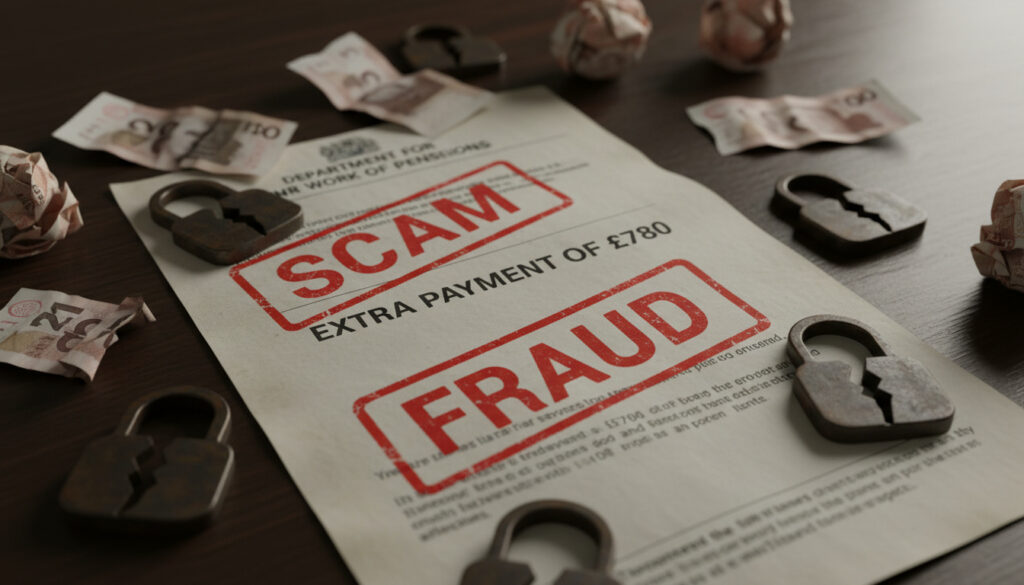
DWP 780 Benefits Extra Payment – Scam Alert and Facts
Claims circulating on social media and messaging platforms regarding a Department for Work and Pensions (DWP) £780 extra benefits payment are unfounded. Official government guidance confirms that no such payment exists in 2024 or 2026, and the specific figure does not correspond to any authorized welfare support scheme, arrears settlement, or cost of living initiative.
The misinformation appears to conflate the now-concluded Cost of Living Payments program with fabricated “arrears” or “backpay” amounts. While the DWP does issue legitimate arrears for historical underpayments, these are calculated individually based on specific case reviews, not distributed as standardized £780 lump sums to Universal Credit, Personal Independence Payment (PIP), or Pension Credit claimants.
Understanding the distinction between verified government support and fraudulent claims protects claimants from sophisticated scams targeting financial data. This analysis examines the origin of the £780 rumor, identifies what support was actually provided during the cost of living crisis, and explains how to verify legitimate DWP communications while checking for genuine entitlement reviews.
What is the DWP £780 Extra Payment?
The £780 figure represents a specific amount frequently referenced in unofficial social media posts, unsolicited text messages, and fraudulent websites claiming to represent the DWP. These posts typically suggest that the department is issuing a “special arrears payment,” “benefits boost,” or “cost of living top-up” specifically valued at £780 to eligible claimants.
Investigation reveals no statutory instrument, ministerial announcement, or official DWP communication validating a £780 disbursement. The Cost of Living Payments guidance explicitly states that no further payments are planned following the final 2024 installments.
Key Facts About the £780 Rumor
- No Official Source: The £780 amount appears exclusively on unofficial websites and social media, never in gov.uk publications or DWP ministerial statements.
- Arrears Mismatch: Genuine DWP arrears are calculated based on individual underpayment assessments; they are never uniform round numbers like £780.
- Cost of Living Conflation: Past Cost of Living Payments followed different schedules (£326, £324, £301, £300, £299 for low-income benefits) totaling £1,550 maximum, not £780.
- Scam Indicators: Messages referencing £780 often demand “verification fees” or bank details, which the DWP never requests via unsolicited contact.
- Disability Benefits: Historical disability cost of living payments were £150 each, not £780.
- Timing Fabrications: Posts claim payments for 2024 or 2026 dates when the DWP has confirmed the cost of living program has concluded.
- Universal Credit Specificity: No arrears scheme specifically ties £780 to Universal Credit backpay in official guidance.
Official Payment History vs £780 Claim
| Payment Type | Actual Amounts | £780 Claim Status |
|---|---|---|
| Low-income Cost of Living (2022-2024) | £326, £324, £301, £300, £299 (Total £1,550) | No correlation |
| Disability Cost of Living Payments | Two payments of £150 | No correlation |
| Pensioner Winter Support | £150-£300 with Winter Fuel Payment | No correlation |
| Universal Credit Standard Allowance | Monthly rates vary by age/circumstance | No £780 lump sum |
| PIP Arrears | Case-by-case calculation | No fixed £780 amount |
| Tax Credit Cost of Living | Same as low-income schedule | No £780 component |
Who Qualifies for the DWP 780 Benefits Payment?
Nobody qualifies for a £780 payment because the scheme does not exist. However, understanding who received legitimate past support clarifies why the misinformation targets specific demographic groups. The DWP and HMRC administered Cost of Living Payments to distinct beneficiary categories between 2022 and 2024, each with specific eligibility criteria.
Eligibility for Past Cost of Living Support
Low-income benefits qualifying for the 2022-2024 payments included Universal Credit, Pension Credit, Income Support, income-based Jobseeker’s Allowance (JSA), income-related Employment and Support Allowance (ESA), Child Tax Credit, and Working Tax Credit. Universal Credit claimants needed valid awards on specific qualifying dates, with payments made automatically.
Disability benefits qualifying for the separate £150 payments included Personal Independence Payment (PIP), Disability Living Allowance (DLA), Attendance Allowance, and Armed Forces Independence Payment. Pension Credit recipients also received Winter Fuel Payment supplements of £150 or £300 during 2022/23 and 2023/24 winters.
Claimants were ineligible for Cost of Living Payments if their benefit was reduced to £0 (nil award) during qualifying periods due to high earnings, sanctions, or overlapping benefits. Overpaid amounts require repayment if ineligibility is discovered subsequently.
Why the £780 Figure Targets These Groups
Fraudulent schemes specifically mention Universal Credit, PIP, and Pension Credit because these benefits have large, vulnerable claimant populations. Scammers exploit awareness that these groups received previous government support, making fabricated £780 promises appear plausible.
Is the DWP £780 Payment Real or a Scam?
The £780 payment claim is fraudulent. The DWP has not authorized, announced, or processed any benefit payment specifically valued at £780. Communications suggesting otherwise constitute attempted fraud designed to harvest personal banking information or payment card details.
Official Government Position
Department for Work and Pensions guidance confirms the Cost of Living Payments program concluded in 2024 with no extensions planned. The department issues all legitimate payments automatically into claimants’ usual bank accounts; it never requires “applications,” “verification checks,” or payment of “processing fees” for arrears.
Identifying Fraudulent Communications
Scam messages referencing £780 typically arrive via WhatsApp, text message, or social media direct messages. They often contain urgent language claiming “limited time” to claim or threaten benefit suspension. Legitimate DWP communications arrive through official journals (for Universal Credit) or postal mail, never requesting bank details via clickable links.
Do not respond to unsolicited messages asking for bank details, National Insurance numbers, or personal information to “release” a £780 payment. The DWP never requests such data via text, email, or social media. Report suspicious messages to Action Fraud and delete them immediately.
When and How Will DWP Pay the £780 Extra?
The DWP will not pay £780 extra because no such payment is authorized. The department has completed its scheduled Cost of Living Payments with the final £299 installment issued in spring 2024. No further automatic payments are planned for 2024, 2025, or 2026 under current policy.
How Past Payments Were Processed
Historical Cost of Living Payments were issued automatically to qualifying accounts. DVLA Renew Driving Licence – Methods, Costs and Timelines demonstrates how government agencies automate payments, similar to how DWP systems identified eligible claimants without requiring applications.
For legitimate arrears arising from administrative errors, the DWP uses computer programs to identify underpayments and issues corrections automatically. These amounts vary by individual case duration and rate differences, never conforming to round figures like £780.
Check your Universal Credit journal or DWP online account for official payment notifications. Genuine arrears appear with specific calculation breakdowns, not lump sum descriptions. Contact DWP directly using the telephone number on your official award letter if uncertain.
Checking for Actual Entitlement
While the £780 payment is fictitious, claimants may have genuine unclaimed entitlements such as Pension Credit top-ups or historical underpayments. Citizens Advice and MoneyHelper provide free verification services for benefit checks unrelated to the £780 scam.
Timeline of DWP Cost of Living Support
The UK government’s cost of living support followed a specific chronological distribution between 2022 and 2024. Understanding this timeline demonstrates why current £780 claims must be fabricated.
- : First £326 payment to low-income benefit claimants and tax credit recipients.
- : Second £324 payment to the same qualifying groups.
- : £301 spring payment issued alongside £150 disability payment.
- : £300 autumn payment distributed to eligible households.
- : Final £299 payment issued, concluding the low-income support scheme.
- : Official confirmation that no further Cost of Living Payments are planned.
Total maximum support for low-income households reached £1,550, while disability claimants received £300 across two payments. No payment schedule included £780 at any stage.
What is Confirmed vs Uncertain About DWP £780 Claims?
Clear separation between verified government policy and speculative claims helps claimants navigate misinformation effectively.
Established Facts
- No £780 payment exists in DWP legislation or guidance
- Cost of Living Payments concluded in 2024
- DWP never requests bank details via unsolicited messages
- Actual arrears are calculated individually, not as round sums
- Spring 2024 saw the final automatic payment (£299)
Information Gaps
- Specific origin of the £780 figure in scam networks
- Complete number of claimants targeted by related phishing
- Whether future welfare changes might coincidentally involve similar amounts
- Full geographic distribution of scam message proliferation
Understanding Legitimate DWP Arrears Processes
While the £780 amount is fabricated, the DWP does conduct legitimate arrears payments when underpayments are discovered. These typically arise from administrative errors in calculating Income Support, ESA, or JSA historical claims, or from successful tribunal decisions awarding higher PIP rates.
Legitimate arrears appear in claimant accounts with detailed breakdowns showing the period covered and calculation method. Unlike the fictitious £780 promise, real arrears rarely match round numbers precisely, often including pence amounts and covering specific date ranges.
The Best Universities in UK – 2025 QS, THE, Guardian Rankings illustrates how complex administrative systems manage precise calculations, similar to DWP arrears computations.
Official Sources and Expert Verification
Credible verification comes exclusively from official government channels. The DWP maintains that all legitimate payment information appears first on gov.uk domains or through secure claimant portals.
“The government provided millions of Cost of Living Payments between 2022 and 2024. We are not planning any further Cost of Living Payments.”
— Official UK Government Guidance
“If you receive a message asking for your personal information or bank details to receive a cost of living payment, this is a scam.”
— Department for Work and Pensions Security Advisory
Summary: The Reality Behind DWP £780 Claims
No £780 DWP payment exists or is planned for 2024, 2025, or 2026. Claimants should disregard social media rumors and verify all benefit information through official gov.uk channels or secure online accounts. Those concerned about underpayments should contact DWP directly using established communication methods rather than responding to unsolicited £780 payment promises.
Frequently Asked Questions
Is the DWP paying £780 extra to benefits claimants in 2025?
No. The DWP has confirmed no £780 payment is planned. The Cost of Living Payments program concluded in 2024 with the final £299 installment.
Why do I keep seeing adverts for £780 benefit claims?
These are scams targeting benefit claimants. Fraudsters use the £780 figure to attract clicks and harvest personal banking information. The DWP never advertises specific payment amounts through social media ads.
How do I check if I’m due real DWP arrears?
Check your Universal Credit journal or DWP online account for payment notifications. Genuine arrears show specific calculation breakdowns. Alternatively, contact DWP using the number on your official award letter.
What should I do if I gave bank details to a £780 scam?
Contact your bank immediately to report potential fraud and freeze affected accounts. Report the scam to Action Fraud and monitor accounts for unauthorized transactions. Never use the same contact details provided by the scammers.
Did anyone actually receive £780 from DWP?
No claimants have received a standardized £780 DWP payment. While individual arrears calculations might coincidentally total similar amounts in specific complex cases, no universal £780 scheme exists.
What benefits qualify for genuine cost of living support?
Past support covered Universal Credit, Pension Credit, Income Support, income-based JSA/ESA, and tax credits. Disability benefits including PIP and DLA qualified for separate £150 payments. All such programs have now ended.
How can I verify if a DWP message is real?
Log into your official gov.uk account or Universal Credit journal directly via your browser—never through message links. Real DWP texts arrive from official numbers and never request bank details or passwords.
More related posts
 McArthur Glen East Midlands – Essential Visitor Guide
 Mickey Rourke Big Brother – 2009 Offer and 2025 Exit Facts
 Flights to Thailand from UK – £387 Fares, Times & Airlines
 Smashing Machine – Dwayne Johnson as UFC Legend Mark Kerr
 Houses for Sale Dunfermline – Types Prices and Best Portals
 Generation Millennials – Birth Years Traits and Comparisons
 Criminal Minds – Complete Cast Seasons & Watch Guide
 M and S Bras – Complete Guide to Non Wired and Plus Size Styles
