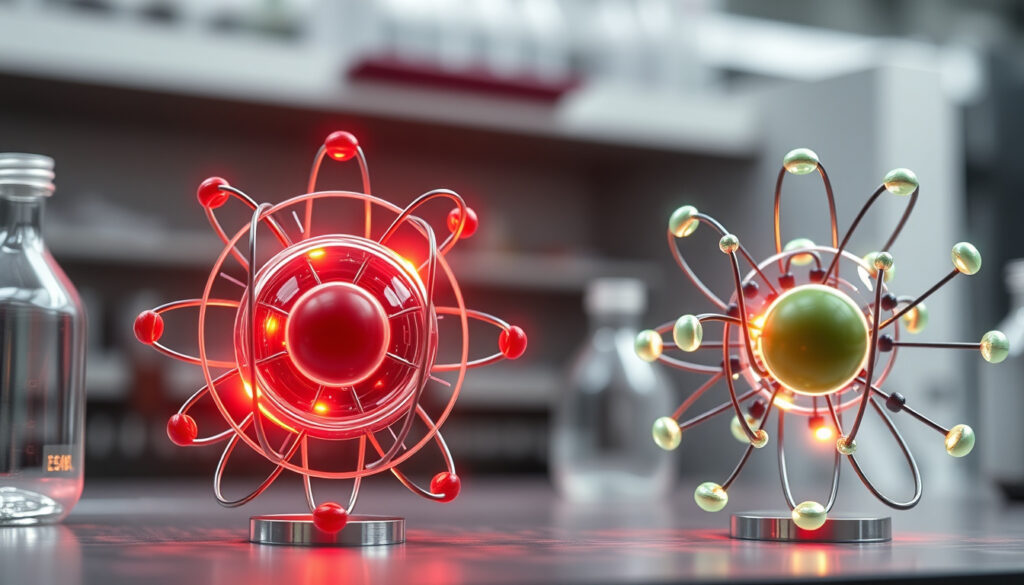
What Is an Isotope – Definition, Examples and Uses
Isotopes represent one of the fundamental concepts in chemistry and physics, describing atoms of the same element that share identical proton counts but differ in their neutron numbers. This distinction creates atoms with varying atomic masses while preserving the chemical identity that defines each element. Understanding isotopes proves essential for fields ranging from medicine to archaeology, where these unique atomic variants enable techniques that shape modern science.
The concept emerged in 1913 when chemist Frederick Soddy first proposed the term to explain observations about radioactive decay series that puzzled scientists of the era. Since then, isotopes have become central to our understanding of atomic structure, nuclear reactions, and the natural world around us. Whether examining the carbon in ancient artifacts or the uranium powering nuclear reactors, isotopes provide the key to understanding how matter behaves at its most fundamental level.
This exploration covers the definition, types, examples, and practical applications of isotopes, providing a comprehensive foundation for students, researchers, and anyone curious about the atomic basis of matter.
What Is an Isotope?
An isotope consists of atoms that belong to the same chemical element yet carry different numbers of neutrons in their nuclei. Because the number of protons determines an element’s identity, all isotopes of a given element share the same atomic number. However, the variation in neutron count produces different mass numbers, giving each isotope its distinct atomic mass.
For instance, all carbon atoms contain 6 protons, which defines them as carbon. Yet carbon atoms can possess 6, 7, or 8 neutrons, resulting in Carbon-12, Carbon-13, and Carbon-14 respectively. Despite these mass differences, isotopes maintain virtually identical chemical properties since chemical behavior depends primarily on electron configuration, which remains unchanged when neutron numbers vary.
The atomic number (protons) identifies the element, while the mass number (protons plus neutrons) distinguishes isotopes within that element.
Overview: Key Characteristics of Isotopes
Same protons, different neutrons
Same element, different mass
Carbon-12, Carbon-14, Deuterium
Medicine, dating, energy
Key Insights About Isotopes
- Isotopes contain identical proton counts but varying neutron numbers, creating different atomic masses within the same element
- Chemical properties remain nearly identical across isotopes because electron configuration stays the same
- Physical properties such as density and melting point can differ noticeably between isotopes
- There are 254 known stable isotopes, and every element possesses at least one isotope
- All artificially created isotopes are unstable and therefore radioactive
- Some elements, like uranium, exist only in unstable forms in nature
- Isotopes form naturally through radioactive decay or artificially via nuclear reactors
Snapshot Facts
| Fact | Details |
|---|---|
| Atomic Number | Remains identical for all isotopes of an element |
| Neutrons | Can vary, creating different isotopes |
| Stability | Can be stable or radioactive |
| Notation | Element name followed by mass number, e.g., Uranium-235 |
| Total Known | More than 3,000 radioactive isotopes identified |
| Discovery | First identified by Frederick Soddy in 1913 |
Examples of Isotopes
Examining specific isotope examples helps clarify how these atomic variants function and why they matter in practical applications. Several elements provide particularly instructive cases that illustrate the concept clearly.
Hydrogen Isotopes
Hydrogen offers the most accessible example of isotope variation. The element exists in three naturally occurring forms that demonstrate the principle effectively. Protium, the most abundant variety, contains just a single proton and no neutrons. Deuterium adds one neutron to the nucleus, giving it twice the mass of protium while retaining identical chemical behavior. Tritium contains two neutrons and undergoes radioactive decay, making it a radioactive isotope.
These variations have significant practical consequences. Deuterium forms “heavy water” when bonded with oxygen, a substance with important applications in nuclear reactors. Tritium emits weak beta radiation and appears in applications ranging from luminous paints to nuclear weapons.
Carbon Isotopes
Carbon isotopes demonstrate how multiple variants can coexist naturally. Carbon-12, comprising approximately 99% of all carbon on Earth, contains six protons and six neutrons. Carbon-13 adds one neutron and represents most of the remaining natural carbon. Carbon-14 possesses eight neutrons and undergoes radioactive decay with a half-life of about 5,730 years, making it invaluable for archaeological dating.
The presence of Carbon-14 in organic materials has revolutionized our ability to date ancient artifacts, fossils, and geological samples. Living organisms continuously exchange carbon with their environment, maintaining a consistent ratio of Carbon-14 to Carbon-12. After death, this exchange stops and the Carbon-14 decays, allowing scientists to calculate the time elapsed since the organism died.
Uranium Isotopes
Uranium occurs naturally as two principal isotopes: Uranium-238, which constitutes about 99.3% of natural uranium, and Uranium-235, which makes up roughly 0.7%. Only Uranium-235 can sustain a nuclear chain reaction, making isotope separation a critical process for nuclear power and weapons. This distinction has shaped geopolitical history and continues to influence international relations regarding nuclear technology.
Types of Isotopes
Scientists categorize isotopes primarily based on their nuclear stability. This fundamental distinction determines how isotopes behave and what applications they suit.
Stable Isotopes
Stable isotopes possess nuclei with balanced proton-neutron combinations that show no tendency toward spontaneous radioactive decay. These isotopes remain unchanged indefinitely under normal conditions, posing no radiation hazards. Most elements have at least one stable isotope, with examples including Carbon-12, Potassium-39, Calcium-40, and Vanadium-51.
Stable isotopes have proven invaluable in scientific research. Their predictable behavior allows scientists to use them as tracers in biological systems, geological surveys, and environmental studies. The absence of radiation hazards means stable isotopes can be applied in contexts where radioactive materials would present unacceptable risks.
Stable isotopes help track water movement through ecosystems, study metabolic pathways in living organisms, and determine the origins of geological samples through characteristic isotopic signatures.
Radioactive Isotopes
Radioactive isotopes, also called radioisotopes, contain unstable nuclear configurations that cause them to emit radiation as they transform into more stable forms. This decay process releases alpha particles, beta particles, or gamma rays depending on the isotope involved. Natural radioactive isotopes include Carbon-14, Potassium-40, and Uranium-238, while scientists also produce artificial radioactive isotopes in nuclear reactors and particle accelerators.
The energy released during radioactive decay has numerous practical applications. In medicine, radioactive isotopes help diagnose and treat diseases by targeting specific tissues or organs. In industry, they facilitate non-destructive testing and material analysis. In research, they enable scientists to trace chemical and biological processes that would otherwise remain invisible.
Classifications of Radioactive Isotopes
Radioactive isotopes fall into several distinct categories based on their origin and behavior. Long-lived radioactive isotopes date back to the formation of our solar system, including Uranium-238, Potassium-40, and Rubidium-87, all of which have half-lives measured in billions of years.
Cosmogenic isotopes form when cosmic rays strike atmospheric or surface materials. Carbon-14 belongs to this category, created continuously as cosmic radiation interacts with nitrogen in the upper atmosphere. This process maintains the equilibrium of Carbon-14 in nature that makes radiocarbon dating possible.
Radiogenic isotopes emerge as products of radioactive decay. Argon-40, for instance, accumulates as Potassium-40 decays over geological timescales. Anthropogenic isotopes arise from human activities, including nuclear testing, reactor operations, and medical procedures.
What Are Isotopes Used For?
The unique properties of isotopes enable applications across numerous scientific, industrial, and medical fields. These uses have become integral to modern technology and research methodologies.
Medical Applications
Medical imaging and treatment rely heavily on radioactive isotopes. Technetium-99m, produced from Molybdenum-99 decay, serves as the most widely used radioactive isotope in diagnostic imaging, appearing in approximately 80% of nuclear medicine procedures worldwide. The isotope’s gamma ray emissions allow physicians to visualize organs, detect tumors, and assess organ function without invasive procedures.
Cancer treatment benefits from isotopes like Cobalt-60, which provides focused radiation therapy to destroy malignant cells. Iodine-131 targets thyroid tissue specifically, making it effective for treating thyroid cancer and certain thyroid disorders. These targeted approaches have improved survival rates and reduced side effects compared to conventional treatments. Radioactive isotopes are crucial in medicine, from diagnostic imaging with technetium-99m to targeted cancer treatments using cobalt-60 and iodine-131, and you can explore the ${definition of isotope} to understand these applications better. definition of isotope
Medical applications of radioactive isotopes require careful handling and precise dosing under professional supervision to maximize benefits while minimizing radiation exposure to patients and medical staff.
Archaeology and Radiocarbon Dating
The development of radiocarbon dating transformed archaeology by enabling scientists to determine the age of organic materials thousands of years old. This technique measures the Carbon-14 remaining in ancient specimens, comparing it against known decay rates to calculate elapsed time since the organism’s death.
The half-life of Carbon-14, approximately 5,730 years, determines the effective range of this method. Objects older than about 50,000 years contain too little Carbon-14 for reliable measurement using standard techniques. Advances in accelerator mass spectrometry have extended the practical range somewhat, though fundamental limitations remain.
Industrial and Agricultural Uses
Food irradiation employs gamma rays from radioactive isotopes to eliminate bacteria, parasites, and insects that contaminate food products. This application extends shelf life and improves food safety without making the food itself radioactive. Cobalt-60 and Caesium-137 serve as common sources for these applications.
Agriculture benefits from isotope techniques in crop research, pest control, and soil analysis. Radioactive tracers help scientists understand nutrient uptake in plants, allowing development of more efficient fertilizers. Sterile insect techniques use radiation to sterilize male insects, reducing pest populations without chemical pesticides.
Geology and Hydrology
Stable isotopes provide crucial data about geological processes and Earth history. Oxygen isotope ratios in ice cores reveal past climate conditions, while carbon isotopes in sedimentary rocks indicate historical biological activity. These natural archives offer insights into planetary evolution spanning billions of years.
Hydrologists employ isotopic tracers to track groundwater movement, determine water source ages, and map aquifer connections. Tritium from nuclear testing in the 1950s and 1960s serves as a chronological marker in water systems, helping scientists trace flow paths and predict contamination spread.
Nuclear Energy and Weapons
Nuclear power generation depends on isotopes that can sustain controlled fission reactions. Uranium-235 and Plutonium-239 serve as primary fuel materials, their ability to release neutrons when splitting making chain reactions possible. Nuclear reactors carefully manage these processes to generate electricity while maintaining strict safety standards.
The distinction between weapons-grade and reactor-grade nuclear materials hinges on isotopic composition. Weapons require highly enriched uranium with high Uranium-235 concentrations or plutonium with specific isotopic profiles. These requirements shape international efforts to prevent nuclear proliferation and monitor nuclear materials worldwide.
Timeline of Isotope Discovery
The understanding of isotopes developed gradually through the work of numerous scientists across several decades, each building on previous discoveries to construct our modern understanding of atomic structure.
- 1913: Frederick Soddy coins the term “isotope” while studying radioactive decay series at the University of Glasgow
- 1919: Francis Aston develops the mass spectrograph, enabling precise measurement of atomic masses and identification of multiple isotopes
- 1932: James Chadwick discovers the neutron, providing the key to understanding why isotopes of the same element have different masses
- 1934: Enrico Fermi produces artificial radioactive isotopes by bombarding elements with neutrons
- 1940s: Manhattan Project advances isotope separation techniques for nuclear weapons development
- 1950s: Commercial nuclear power begins, driving research into reactor-produced isotopes
- 1960s: Stable isotope tracers become standard tools in biological and geological research
- Present: Medical isotopes remain essential for diagnostics and treatment, with ongoing research into new applications
Understanding Isotopes: Clarity and Common Misconceptions
While the concept of isotopes is well-established in modern science, several misconceptions persist that merit clarification for students and general readers approaching this topic.
| Established Understanding | Common Misconceptions |
|---|---|
| Isotopes are atoms of the same element with different neutron counts | Isotopes are entirely different elements with different properties |
| All elements have isotopes, including common ones like carbon and hydrogen | Only heavy or radioactive elements have isotopes |
| Stable isotopes pose no radiation hazard under normal conditions | All isotopes are dangerous and radioactive |
| Chemical behavior depends primarily on electrons, so isotopes behave similarly chemically | Isotopes have completely different chemical properties |
| Some elements have only radioactive isotopes, but many have stable options | Every element must have at least one stable isotope |
The Role of Isotopes in Science and Industry
Isotopes occupy a central position in both fundamental scientific research and practical industrial applications. Their utility stems from the ability to track, date, and analyze processes that would otherwise remain opaque to observation.
In research contexts, isotopes serve as tracers that reveal hidden pathways and mechanisms. Biological studies use labeled isotopes to follow nutrients through metabolic processes. Chemical reactions incorporate isotopic markers to track reaction intermediates. Geological surveys analyze isotopic ratios to determine sample origins and formation conditions.
Industrial applications leverage the unique properties of specific isotopes for quality control, materials processing, and energy production. Nuclear power generation, medical imaging, and food sterilization all depend on isotopes produced or refined through specialized processes. These applications generate significant economic value while addressing important societal needs.
Expert Perspectives on Isotope Science
Scientific organizations worldwide recognize isotopes as fundamental to understanding matter and developing beneficial technologies. The International Atomic Energy Agency emphasizes that stable and radioactive isotopes serve essential roles in medicine, agriculture, water resource management, and environmental protection.
Isotopes are variations of chemical elements that have the same atomic number but different atomic masses. They are central to understanding atomic structure and have countless practical applications that benefit humanity.
U.S. Department of Energy, Office of Science
Educational institutions incorporate isotope concepts into chemistry and physics curricula, recognizing their importance for students pursuing scientific careers. These foundational topics prepare learners to engage with more advanced material in nuclear chemistry, astrophysics, and environmental science.
Summary
Isotopes represent atoms of the same element sharing identical proton counts but differing in neutron numbers, resulting in distinct mass properties while maintaining chemical identity. This fundamental concept explains natural variation within elements and enables technologies spanning medicine, archaeology, energy production, and environmental science.
Whether examining the carbon in ancient manuscripts or the uranium powering modern reactors, isotopes provide essential tools for understanding matter at its most fundamental level. Their dual nature as both stable variants and radioactive tracers expands their utility across countless applications.
For those interested in exploring related statistical concepts, consider learning about What is the mean as a complementary topic in data analysis. Similarly, understanding What does apple cider vinegar do demonstrates how everyday products connect to underlying chemical principles involving atomic and molecular structures.
Frequently Asked Questions
What is an isotope in simple terms?
An isotope is a version of a chemical element that has a different number of neutrons than other versions. All atoms of the same element have the same number of protons, but isotopes have varying masses because their neutron counts differ.
What is an isotope in chemistry?
In chemistry, isotopes are atoms of the same element that contain the same number of protons but different numbers of neutrons. This affects their atomic mass but not their chemical behavior, since chemical reactions depend primarily on electrons.
What is an isotope example?
Carbon-12 and Carbon-14 are common examples. Both are carbon atoms with 6 protons, but Carbon-12 has 6 neutrons while Carbon-14 has 8 neutrons, giving them different masses and properties.
What are the two main types of isotopes?
The two main types are stable isotopes, which do not undergo radioactive decay, and radioactive isotopes, which spontaneously emit radiation as they transform into more stable forms.
What are isotopes used for in medicine?
Medical isotopes help diagnose diseases through imaging techniques, treat cancers through targeted radiation therapy, and sterilize medical equipment through gamma ray exposure.
What is an isotope in physics?
In physics, isotopes represent nuclear variants of elements distinguished by their neutron count. These variations affect nuclear properties, stability, and behavior in particle interactions and nuclear reactions.
How do isotopes form naturally?
Natural isotopes form through radioactive decay of heavier elements, cosmic ray interactions in the atmosphere, and processes occurring during stellar nucleosynthesis in stars.
What is the difference between stable and radioactive isotopes?
Stable isotopes have balanced proton-neutron combinations that remain unchanged indefinitely, while radioactive isotopes have unstable nuclei that decay over time, emitting radiation in the process.
More related posts
 EasyJet Emergency Landing Munich – Full Incident Breakdown
 Houses for Sale Dunfermline – Types Prices and Best Portals
 When Is the Traitors Final – Date, Time and BBC Details
 Pain in Right Side – Common Causes and When to Seek Help
 Argo Blockchain Share Price – Live Charts, Analysis and Forecast
 Step by Step Drawing – Complete Guide for All Levels
 Ty Burrell – Alive, Wife, Net Worth, Height and Instagram Explained
 Dog Boarding Near Me – Costs, Safety Tips & Top Facilities
