Potty Train – Complete Guide With NHS and Expert Advice
Few parenting milestones feel as significant—or as pressure-filled—as potty training. Across the UK, parents often hear conflicting advice: some recommend starting early preparation, others say to wait until the child shows clear signs. The consensus from NHS-linked sources and the charity ERIC is that there is no single “right age.” Most children become ready somewhere between 18 months and 3 years, and the deciding factor is physical and behavioural readiness, not the calendar.
This guide draws on UK-specific guidance from the NHS, ERIC, and the Welsh Government, as well as evidence from the Mayo Clinic and the American Academy of Pediatrics. It covers when to start, a step-by-step approach, recommended equipment, and what the main authorities advise. Every fact below comes from those sources—no speculation, no invented tips.
When Should You Start Potty Training?
The most common question from parents is about timing. ERIC, the UK charity for children’s bowel and bladder health, states that children are typically ready between about 18 months and 3 years and need to be physically ready. NHS-style guidance from Wirral Community Health notes that most parents begin thinking about potty training between 2 and 2.5 years, but stresses there is no perfect time. The key is to look for readiness signs rather than targeting a specific age.
12–18 months for skill building; active training from 18 months to 3 years
3–6 months for daytime dryness
Staying dry for 1–2 hours, showing interest, ability to pull pants up/down
Potty or training seat, step stool, training pants, spare clothes
- Starting earlier (12–18 months) focuses on skill-building, not elimination control.
- Consistency and positive reinforcement matter more than the age you start.
- Girls typically show readiness slightly earlier than boys, but individual variation is high.
- UK guidelines (NHS/ERIC) emphasise child-led readiness; US guidelines (AAP) lean toward waiting until 2–3 years.
- Potty training should be avoided during major life changes such as a new sibling or moving home.
| Fact | Value |
|---|---|
| Average age to begin (US) | 2–3 years |
| Average age to begin (UK preparation) | 12–18 months |
| Typical daytime dryness achieved | By age 3 for boys, 2.5–3 for girls |
| Bladder control before bowel control | Usually yes |
| Success rate with child-led approach | Higher long-term success |
How to Potty Train a Girl: A Step-by-Step Guide
Parents searching specifically for potty training a girl will find that the process is nearly identical for all children. The main difference noted in the research is that girls may show readiness slightly earlier on average, but readiness signs matter far more than gender. The following three-step approach from ERIC and NHS-linked sources works for any child.
Step 1: Preparation
Start by noticing readiness signs and introducing the potty gradually. Talk about nappy changes so the child understands words like wee, poo, wet, and dirty. Let them see you using the toilet to normalise the process. Books, stories, and toy role-play can build familiarity without pressure.
Place the potty in a visible, easy-to-reach spot. One NHS source suggests keeping one in the bathroom and another downstairs. Let the child sit on it fully clothed at first if that helps them adjust.
Step 2: Practice
Encourage regular potty sits during the day, especially after meals when a poo is more likely. Watch for signals such as fidgeting, going quiet, or squirming, and guide the child to the potty. If the child resists, pause and try again in a few weeks—forcing can backfire.
Step 3: Stop Nappies
Move to pants when the child is ready and you can supervise closely. Keep calm about accidents—simply clean up without making a fuss. Use praise and encouragement rather than pressure. ERIC’s school-focused guidance emphasises the “5 Ps”: Prepare, Practice, Pants, Plan, Praise.
Potty Training in the UK: NHS and ERIC Guidelines
How to Potty Train in the UK?
UK parents have access to consistent, child-led guidance from the NHS and ERIC. The Welsh Government, in partnership with the NHS, advises that you can start helping your child learn the skills needed for toilet training from about 12–18 months old. The approach is gradual and skill-based, not focused on early dryness.
What Does the NHS Recommend for Potty Training?
NHS-linked advice from Wirral Community Health stresses three core messages: do not start because of age alone; start when your child shows readiness; avoid pressure and pause if the child is upset or resistant. It also highlights that night-time dryness is separate from daytime training—most children become reliably dry at night between 3 and 5 years, and some 5-year-olds still wet the bed occasionally.
What Does ERIC Recommend for Potty Training?
ERIC, the UK’s leading charity for children’s bowel and bladder issues, provides a three-step method: preparation, practice, and perfecting. Their school-readiness guide adds the “5 Ps” and encourages helping children get used to big kid pants, using toilets away from home, and having a toilet routine. ERIC’s materials are regularly updated and widely used in NHS settings.
While UK guidelines encourage early skill exposure from 12 months, the American Academy of Pediatrics recommends waiting until the child is between 2 and 3 years old and shows clear readiness. Both agree that forced training leads to resistance.
Potty Training Equipment: Seats, Pants, and More
What Is a Potty Training Seat?
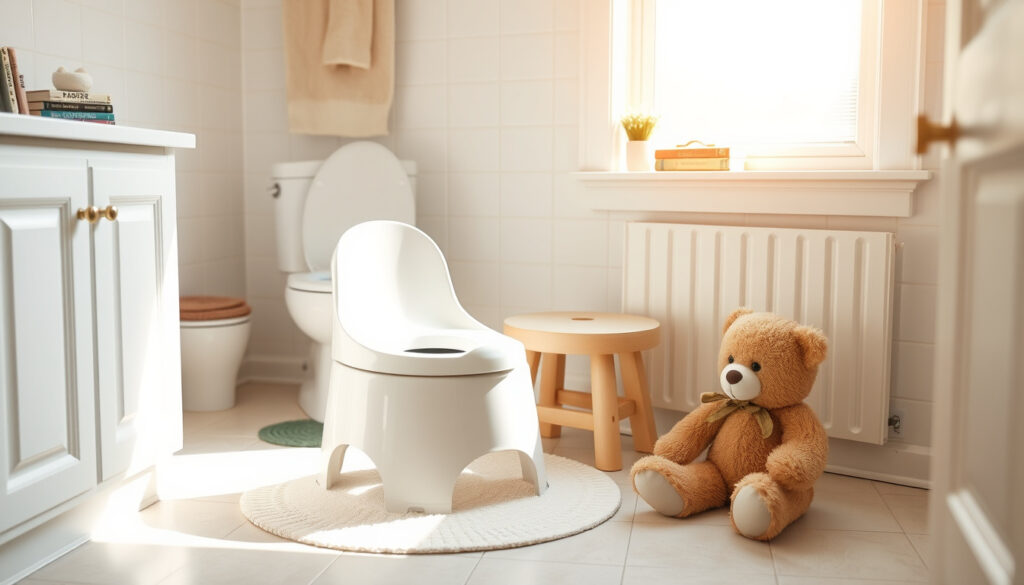
A potty training seat is a small, child-sized seat that fits on top of a regular toilet, or a standalone potty. Experts recommend a potty or training seat to give the child stability and confidence. A step is also important—one guide advises that the step should be high enough that the child’s knees are higher than their hips when seated, which helps with bowel movements.
What Are Potty Training Pants?
Training pants, often called “big kid pants,” are thicker underwear that can absorb minor accidents while still letting the child feel wetness. ERIC suggests moving to pants as a clear sign that nappies are finished. Loose clothing that is easy to remove also helps, as does having spare pants, trousers, and wipes ready when going out or preparing for school.
Starting before the child shows readiness can lead to stress and resistance. Avoid punishing accidents—they are a normal part of learning. And do not confuse daytime training with night-time dryness; many children need months or years longer for night-time control.
What Does the Potty Training Readiness Timeline Look Like?
- 12–18 months: Begin teaching skills—sitting on the potty, understanding body signals (UK early approach).
- 18–24 months: Many children show readiness cues; can start active training if interested.
- 2–3 years: Most common start window; child can usually stay dry for 2+ hours.
- 3–4 years: Daytime training typically complete; night-time may take longer.
What Do Experts Agree and Disagree On?
| Established information | Information that remains unclear |
|---|---|
| Potty training requires physical and emotional readiness. | Optimal starting age: UK guidelines suggest earlier preparation; US guidelines recommend waiting until 2–3. |
| Positive reinforcement (praise, rewards) is effective. | Gender differences: some studies show girls train earlier, but individual variation is broad. |
| Accidents are normal and should be handled without punishment. | Best method: no single “best” method; child-led vs. scheduled approaches both work. |
Why Does Potty Training Differ Across Guidelines?
Potty training is a major developmental milestone but practices vary widely across cultures. The UK approach, led by the NHS and ERIC, emphasises early skill exposure from 12 to 18 months, while US paediatricians generally advise waiting until clear readiness appears between 2 and 3 years. Both traditions agree that forcing a child who is not ready leads to resistance and longer training times. The rise of modern products such as training seats, reward apps, and specialised pants reflects growing parental focus on convenience, but no product replaces consistency and patience.
What Do the Main UK Authorities Say?
“We’ve broken down potty training into 3 easy steps: preparation, practice and perfecting those skills!”
— ERIC
“The first step is to get your child ready for potty training. You’ll teach your child the basics about concepts such as toilets and passing urine and stool.”
— Mayo Clinic
“You can start helping your child to learn the skills needed for toilet training from the time they are about 12 – 18 months old.”
— NHS (via Gov.Wales)
“The average age toilet training begins in the United States is between 2 and 3 years of age.”
— HealthyChildren.org (AAP)
What Comes After Potty Training?
Once daytime training is established, night-time dryness often takes months or years to follow. Encourage hand washing and flushing independence, and transition to a regular toilet with an adapter seat. If regression occurs, it is common and should be handled with patience—temporary setbacks are normal. For more on related developmental milestones, see our guide on toddler developmental milestones.
Frequently Asked Questions
How to potty train dogs?
Potty training dogs (housebreaking) is a different process entirely. For puppies, use crate training, frequent outdoor trips, and positive reinforcement. Consult a veterinarian or professional trainer for specific advice. For adult dogs, it may require addressing underlying issues.
What if my child is afraid of the potty?
Fear is common. Let the child sit on the potty fully clothed first, use books about potty training, and avoid pressure. Pause for a few weeks if resistance continues; forced training usually backfires.
Should I use rewards like stickers?
Positive reinforcement such as stickers, praise, or small rewards can help, but avoid making rewards the sole focus. The goal is to build internal motivation.
How do I handle constipation during potty training?
Constipation can make training painful. Ensure the child has plenty of fluids, fibre, and foot support (knees higher than hips). If constipation persists, consult a health visitor or GP.
Is it normal for my child to hold wee for hours?
Some children can hold wee for 1.5 to 2 hours once ready, according to ERIC advice. If your child holds it much longer or seems uncomfortable, encourage regular potty sits.
When should I switch from nappies to pants for daytime?
Switch when the child regularly stays dry for at least an hour and can cooperate with potty sits. Moving to pants is a clear signal that nappies are done.
Can I potty train during summer?
Many parents find summer easier because children wear fewer clothes and accidents are less disruptive. However, any consistent time works if the child is ready.
What is the difference between a potty and a toilet training seat?
A potty is a standalone, child-sized toilet. A training seat fits onto a regular toilet. Both are effective; choose based on your child’s comfort and your bathroom setup.
More related posts
 Inigo Philbrick – The True Story of the $86 Million Art Scam
 Trump Latest News Today – Tulsi Gabbard Resigns as DNI
 Best Universities in UK – 2025 QS, THE, Guardian Rankings
 Victoria Mboko – Ranking, Age, Injury, and Career Update
 Used Cars for Sale Near Me – Top UK Sites and Cheap Deals
 Belgian Pro League Standings – 2024/25 Regular Season Table
 Ryder Cup Latest Scores – Europe Retains Cup with 15-13 Win
