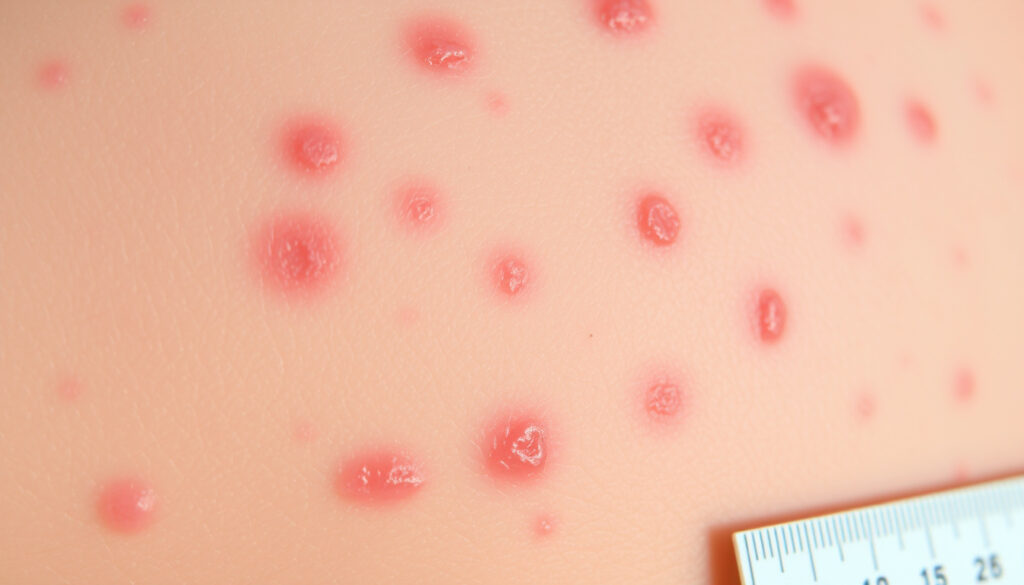
Red Blotches on Skin – Causes, Pictures and When to Worry
Red blotches on the skin often appear suddenly and can stem from a variety of causes. They range from harmless heat bumps to signs of an allergic reaction or infection. Understanding what you are looking at and whether it itches can help you decide on the next step.
While most blotches are temporary and resolve on their own, certain patterns warrant a doctor’s visit. This guide covers the most common causes, how to distinguish itchy from non-itchy blotches, what to look for in babies, and when it is time to seek medical attention.
What causes red blotches on skin?
Red blotches appear when blood vessels dilate or when inflammation reaches the skin surface. Triggers include heat, allergens, irritants, infections, and underlying skin conditions. The main groups are outlined below.
- Common Causes – Allergies, heat rash, eczema, contact dermatitis, infections, and stress are frequent triggers. For more on infection-related rashes, see our guide on skin infections.
- Itchy vs Non-Itchy – Itchy blotches often indicate allergy or eczema; non-itchy blotches may signal heat rash, blood vessel changes, or petechiae.
- When to See a Doctor – Seek medical attention if blotches spread rapidly, are accompanied by fever or breathing difficulty, ooze, or persist without explanation.
- Home Care Tips – Cool compresses, antihistamines for allergies, fragrance-free moisturizers, and avoiding known triggers can help mild cases.
Several key insights from medical sources can help narrow down the cause:
- Most red blotches are benign and resolve on their own, but some underlying conditions require medical treatment.
- Itchiness is a key differentiator: allergic reactions and eczema typically itch; heat rash and certain infections may not.
- Red blotches in babies often stem from drool rash, heat rash, or viral exanthems; diapers and new foods are additional triggers.
- Intermittent red blotches (come and go) frequently correlate with allergic urticaria, physical triggers (cold, heat), or stress-induced flares.
| Type | Cause | Appearance | Itchiness | Treatment |
|---|---|---|---|---|
| Heat Rash | Sweat duct blockage | Small red bumps, often in skin folds | Mild or none | Cooling, loose clothing |
| Allergic Reaction | Allergen (food, drug, plant) | Red welts or blotches, may be raised | Usually very itchy | Antihistamines, avoid trigger |
| Eczema | Skin barrier dysfunction | Red, dry, cracked patches | Intense itching | Moisturizers, topical steroids |
| Contact Dermatitis | Irritant or allergen contact | Red, blistered, oozing area | Moderate to severe | Avoid irritant, barrier creams |
| Petechiae (non-blanching) | Bleeding under skin (minor trauma, infection) | Small red/purple flat dots | None | Depends on cause; seek medical advice |
Red blotches on skin itchy
Itchy red blotches are most often linked to allergic reactions (hives), eczema, or contact dermatitis. Hives appear as raised welts that can change shape and location within hours. Eczema presents as dry, scaly patches that tend to flare in response to irritants or dry air. Chickenpox, though less common since vaccination, causes intensely itchy blisters that start on the torso and head. A 2025 WebMD slideshow notes that “these red welts usually itch” and may be triggered by stress or illness.
Red blotches on skin not itchy
Non-itchy blotches often point to heat rash, petechiae, or certain viral exanthems. Heat rash appears as small red bumps in skin folds and is generally not itchy. Petechiae are tiny, flat, red-purple dots that do not blanch when pressed; they require medical evaluation because they indicate bleeding under the skin. For more on this condition, see petechiae causes and treatment. In babies, roseola and fifth disease produce red blotches that are typically non-itchy.
Small red blotches on skin
Small red blotches can be heat rash bumps, petechiae, or the early stage of a viral rash. When they are pinpoint and do not disappear under pressure, they are likely petechiae. When they are clustered in skin folds and appear after sweating, heat rash is probable. Small red spots that later blister may be chickenpox or hand-foot-mouth disease.
Red blotches on skin baby
Red blotches on a baby’s skin are common and often harmless. According to sources such as UF Health and the NHS, up to 50% of newborns develop erythema toxicum – flat red splotches with a white or yellow centre that appear on the face, body, arms, or thighs. This rash is non-itchy, comes and goes, and resolves within one to two weeks. Viral exanthems such as roseola (high fever followed by pink blotches) and fifth disease (slapped-cheek look with lacy blotches) are also common in infants aged 6 to 24 months. Chickenpox, hand-foot-mouth disease, and molluscum contagiosum are other viral causes. Allergic reactions (eczema, hives) and fungal infections (pityriasis versicolor) can produce red blotches in babies as well.
Seek medical advice if the baby’s rash is accompanied by fever above 102°F, if the child is unusually lethargic, if the blotches blister or ooze, or if they appear suddenly and spread rapidly. A health care professional can distinguish between a benign viral rash and a condition that requires treatment.
Red blotchy skin pictures
Visual identification is one of the fastest ways to narrow down the cause of red blotches. The NHS provides an online skin rashes tool that shows images of different rashes with brief summaries. The video resource from YouTube demonstrates 17 common rashes in real time. The FirstDerm website offers pictures of pink pityriasis spots and other conditions.
Red blotches on skin not itchy photos
Non-itchy red blotches often have a distinct visual pattern. Roseola appears as flat pink blotches that emerge after the fever breaks. Fifth disease starts with bright red cheeks and later develops a lacy pattern on the arms and legs. Erythema toxicum looks like red splotches with a tiny white or yellow centre. Petechiae are small, flat, red-purple dots that do not blanch. These images are available through the sources listed above.
Always use medical images as a reference, not a diagnosis. Compare the location, texture, and accompanying symptoms. If the rash looks like petechiae (non-blanching dots) or is accompanied by fever, consult a doctor rather than relying on self-identification.
Red blotches on skin that come and go
Intermittent red blotches that appear, fade, and reappear are often caused by urticaria (hives) triggered by food, medication, or physical factors such as cold, heat, or pressure. Viral exanthems like roseola can also come and go – the rash appears suddenly after the fever ends and fades within a few days. Erythema toxicum in newborns is known to disappear and reappear before resolving completely. The intermittent nature of these rashes usually points to an allergic or viral origin rather than a persistent skin disorder.
How long do red blotches last?
Duration varies widely depending on the cause:
- Heat rash – Fades within hours once the skin is cooled.
- Allergic reaction – Subside within a few days with antihistamines or removal of the trigger.
- Eczema – Can persist or recur for weeks; requires ongoing moisturising and sometimes topical steroids.
- Viral exanthems (roseola, fifth disease) – Last 3 to 7 days and resolve on their own.
- Petechiae – May take days to weeks to clear, depending on the underlying cause.
- Molluscum contagiosum – Can remain for months to a year before self-resolving.
If red blotches persist beyond a week without improvement or worsen, a medical evaluation is recommended. The Mayo Clinic advises checking for accompanying symptoms such as fever, joint pain, or breathing difficulties.
Certainty vs uncertainty in self-diagnosis
| Established Information | Information That Remains Unclear |
|---|---|
| Red blotches from heat rash, allergic urticaria, and contact dermatitis can often be identified by history and appearance. | Conditions like petechiae, annular erythema, or systemic lupus may mimic common rashes and require blood tests to confirm. |
| Itchiness is a reliable clue: allergies and eczema are typically itchy; heat rash and petechiae are not. | Some viral rashes (e.g., roseola) are non-itchy, while others (e.g., chickenpox) itch intensely – overlap can confuse. |
| Blotches that blanch under pressure are usually due to dilated blood vessels and are less concerning. | Non-blanching petechiae may be caused by a simple bump or by a serious infection – it is not always possible to tell at home. |
How to differentiate common causes
By itchiness. Itchy blotches point toward allergic urticaria, atopic dermatitis, or insect bites. Non-itchy blotches suggest heat rash, pityriasis rosea, or vascular causes.
By distribution. Red blotches in skin folds (neck, groin, armpits) are classic for heat rash. Symmetrical patches on arms and legs may indicate contact dermatitis. Blotches that appear after sun exposure hint at photosensitivity.
By temporal pattern. Rashes that come and go within hours suggest urticaria (hives). Persistent blotches over days may be eczema or an infection. Rapid spreading requires immediate medical evaluation.
Expert sources and quotations
Contact dermatitis causes the skin to become itchy, blistered, dry and cracked. Lighter skin can become red, and darker skin can become dark brown, purple or grey.
The skin rashes tool will show you images of different rashes and what they are called. It provides a brief summary of the condition and the treatment available.
These red welts usually itch. They can be a sign of an allergic reaction, but stress or an illness can cause them, too.
Next steps for persistent or concerning red blotches
If red blotches do not improve within 48 hours or are accompanied by worrying symptoms, take a photo, note the location and any itchiness, check for fever or joint pain, and try antihistamines if allergy is suspected. Avoid known irritants and keep the skin cool and moisturised. Consult a general practitioner or dermatologist if the blotches worsen, spread, or do not clear. For more detail on identifying common rashes, see Understanding Common Skin Rashes.
More related posts
 What Network Doe Sky Mobile U e – O2 Network Coverage & 5G Speed
 Belly Piercing – Complete Guide to Healing, Rejection and Jewelry
 King George Vi – Biography Death Cause and Legacy
 Cast Of Guardians Of The Galaxy – Every Main Actor And Character
 Benito Mussolini – Life, Death, and Legacy of Italy’s Fascist Dictator
 Christopher McDonald Movies and TV Shows – Full Filmography
 B&Q Li burn – Opening Hour , Service and Acce ibility 2025
 Sophia Myles – Biography, Age, Movies, and David Tennant
